This Scholarship celebrates the life-long dedication and advocacy that Sybil Emslie provided to the care and protection of animals in Australia. It aims to support the work of animal law undergraduate, Masters and PhD students and practising lawyers through the provision of a $1000 cash grant.
| Year | Name |
| 2025 | Taylor Jobling |
| 2024 | Frankie Bray |
| 2023 | Alexandra Whittaker |
| 2022 | Morgan Stonebridge |
| 2021 | Francesca Nyilas |
| 2020 | Ashleigh Best |
| 2019 | Tara Ward |
| 2018 | Britta Maunder |
| 2017 | Xanthe Shaw |
| 2016 | Dr Meg Good |
The RSPCA Australia Alan White Scholarship for Animal Welfare Research was established in 1989 to advance the cause of animal welfare in Australia.
The scholarship is named after Mr Alan White, a past President of RSPCA Australia and a past President of RSPCA Queensland. The Alan White Scholarship is available to full-time or part-time students in Australian tertiary institutions for the funding of original research aimed at improving the welfare of animals in Australia. The scholarship award can be used towards any area of research that fits the general scholarship criteria.
RSPCA Australia is currently reviewing the scholarship program.
| Year | Name | Project Title |
| 2023 | Heidi Monkman | Human DNA detection and use in investigations of non-accidental injuries in animal abuse cases |
| 2022 | Victoria Condon | Outcomes of feral horse management methods for horses, people and the environment - a One Welfare approach. |
| 2021 | Gloeta Massie | Identifying the impacts of human attitudes and actions on the welfare of recused wildlife. |
| 2021 | Vijay Rawat | Working like a dog: Examining the standards and practices related to the welfare of Australian therapy dogs. |
| 2020 | Carmen Glanville | Identifying the human psychological and behavioural predictors of dog welfare in the home environment. |
| 2019 | Amber Brown | Developing a novel electronic nose to combat the illegal trade of the native Australian reptile, Tiliqua rugosa. |
| 2018 | Gemma Ma | Home is where the hound is: Pet ownership in remote New South Wales, Australia and the impact of Aboriginal Community Companion Animal Health Programs (ACCAHPs). |
| 2017 | Mark Kelman | Can targeted communication and preventative vaccination programs for unvaccinated puppies and dogs lead to a decrease in new Canine Parvovirus cases in high-risk areas and during disease outbreak situations? |
| 2016 | Lily van Eeden | The dingo in Australian society: public perceptions of dingoes and their management. |
| 2015 | Kendy Tzu-Yun Teng | Awareness of and attitudes towards two major companion welfare issues: canine inherited diseases and cat obesity in Australia. |
| 2014 | Dennis Wormald | Re-examining the critical socialisation period in dogs and its relevance to vaccination protocols in Australia. |
| 2013 | Cybele May | Understanding the knowledge and attitudes of veterinarians regarding issues in cat overpopulation and how these impact on recommendations to clients in clinical practice. |
| 2012 | Trudy Sharp | Factors influencing public perceptions of kangaroo management. |
| 2011 | Kylie Soanes | Can road crossing structures be used to preserve arboreal mammal populations? |
| 2010 | Georgeanna Story | Evaluating the survival of rehabilitated common wombats (Vombatus ursinus) released into free-living populations. |
| 2009 | Mia Cobb | Examining the physiological effects of domestic dogs entering a kennel facility. |
| 2008 | Ian McDonald | Reproductive and behavioural effects of a single injection Gonadotrophin Releasing Hormone (GnRH) vaccine on Eastern Grey Kangaroos. |
| 2007 | Aimee Jade Silla | Hormonal induction of sperm release in the roseate frog (Geocrinia rosea). |
| 2006 | Patricia Lavery | Investigation of PCB concentrations in coastal dolphins in South Australia: Threats to species health and links with parasitic lung nematodes (in progress). |
| 2005 | Lyndall Pettett | The development of age related oral health care guidelines in zoos. |
| 2004 | Shuron Billman | Characterising the psychological underpinnings of animal hoarders: a Central Queensland study. |
| 2003 | Susan de Burgh | Animal welfare education for Australian indigenous and Papua New Guinean primary school children. |
| 2002 | Brad Page | Reducing the incidence of entanglements on New Zealand fur seals in southern Australia. |
| 2001 | Sarah Wright | Non-human animal rights - legislation, ethics and reform. |
| 2000 | Faith Walker | The effects of habitat fragmentation on the genetic and social structure of the southern hairy-nosed wombat (Lasiorhinus latifrons). |
| 1999 | Daniel Rogers | Identification of animal individuals by analysis of acoustic signals. |
| 1998 | No recipient | |
| 1997 | No recipient | |
| 1996 | Alison Murray | Developing the natural behavioural repertoires of nocturnal mammals through enrichment techniques. |
| 1995 | No recipient | |
| 1994 | Ramesh Sivacolundhu | Effects of early age desexing of dogs and cats. |
| 1993 | Clare Rudkin | Pecking and feather pecking in growing chickens. |
| 1992 | Steven McLeod | Foraging behaviour of red kangaroos and sheep in arid New South Wales. |
| 1991 | Erica Seton | Anaphylaxis associated with daily heartworm prevention treatment for dogs. |
This scholarship category is available for individual research projects that are related to the development of humane alternative farm animal production systems.
“The Sybil Emslie scholarship provided both a practical support to enable my research and a valuable form of recognition from the RSPCA.”
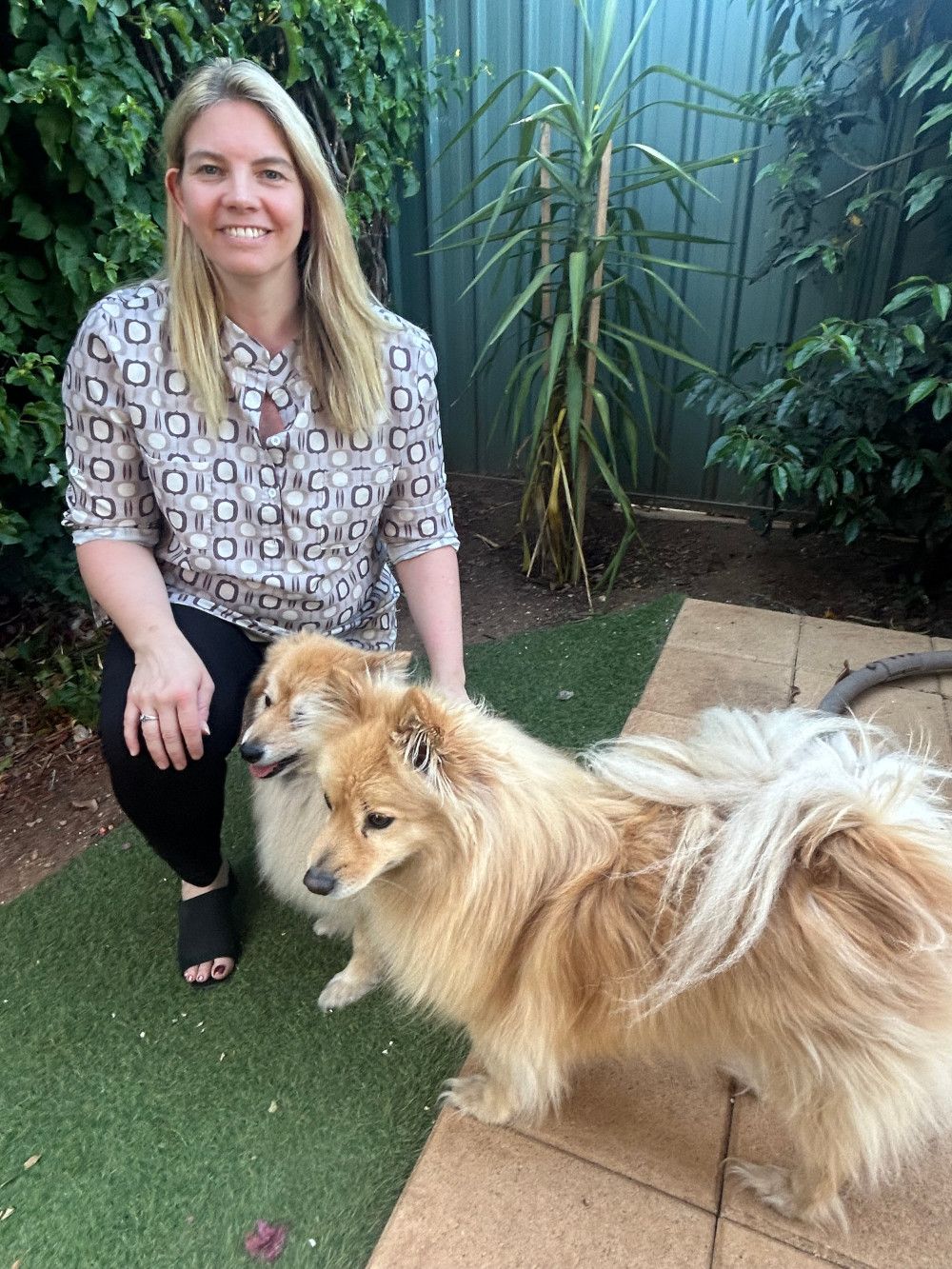
Dr Morgan Stonebridge is an emerging leader in animal law whose work bridges rigorous academic research with tangible legal reform. Awarded the Sybil Emslie Animal Law Scholarship in 2022, Morgan credits the recognition as a pivotal moment in shaping her career trajectory.
At the time, Morgan had just completed an Honours thesis examining the legality of calf-roping in Australia and was beginning a PhD exploring how empathy can foster enduring public support for animal protection law reform. The Sybil Emslie scholarship not only provided practical support but affirmed the value of pursuing animal law as a serious academic discipline, bolstering her confidence during the often-uncertain early stages of research.
Morgan's thesis sat at the intersection of legal doctrine and political philosophy, aiming to support both long-term reform and more immediate improvements to animal protections in Australia. Since receiving the scholarship, Morgan has completed her PhD and continues to develop a strong research and teaching profile, while maintaining engagement with the RSPCA with research relating to rodeo practices.
Among Morgan’s key achievements is her contribution to debates on the adequacy of animal welfare regulation in Australia. Her research spans issues including rodeo practices, the treatment of animals in domestic violence contexts, and the broader legal implications of animal sentience. Notably, her co-authored work on animal abuse within domestic violence settings helped inform advocacy efforts leading to amendments to Tasmania’s Family Violence Act, formally recognising animal abuse as a form of domestic violence.
Currently lecturing in animal law at Deakin, Morgan is a strong advocate for the study and practice of animal law, describing it as a dynamic and impactful field. With growing societal concern for animal welfare, she sees increasing opportunities for legal professionals and researchers to drive meaningful change through reform, education, and advocacy.

“Winning the Sybil Emslie scholarship played a significant role in shaping my career by enabling me to pursue opportunities that align with my passion for animals and the environment.”
Francesca Nyilas won the 2021 RSPCA Sybil Emslie Animal Law Scholarship in recognition of her commitment to advancing animal and environmental outcomes through policy and practice. The scholarship played a pivotal role in shaping her career, enabling Francesca to pursue opportunities aligned with her passion for animals while expanding her career into the climate, planning, energy and infrastructure sectors.
Since receiving the award, Francesca has worked in climate change policy for the ACT Government, in planning and environmental law, and now as a lawyer in energy and infrastructure, with a focus on energy transition and renewable energy projects. Across these roles, she maintains a strong focus on the impacts of legal and policy decisions on animals and broader environmental outcomes.
Francesca describes herself as an environmental pragmatist, driven by the belief that the development of the environment and the protection of the environment and animals can be thoughtfully balanced. This perspective guides her approach to working with clients and within organisations to achieve practical, outcomes-focused results. Alongside her professional work, she continues to contribute directly to animal welfare through volunteer roles, including with the Australian Alliance for Animals, where she supports policy initiatives and advocacy campaigns aimed at strengthening protections for animals.
One of Francesca’s key achievements is co-founding the UNSW Animal and Environmental Law Society while completing her combined degree in law and international studies at UNSW, creating a dedicated platform for students to engage with animal and environmental law issues and explore diverse career pathways within these areas of law. The initiative not only raised awareness of these fields but also inspired her published research on animal welfare in international law.
Francesca strongly recommends studying animal law, emphasising its broad relevance across legal and policy areas, from environmental law to corporate regulation. She believes it equips practitioners with a critical lens to understand the impact of human activity on animals and the environment, while offering a strong sense of purpose. For Francesca, animal law represents a powerful foundation for contributing to meaningful, systemic change.

“The Sybil Emslie Scholarship connected me with a wider animal law community and reinforced my commitment to work at the intersection of law, animal welfare and policy.”
Alexandra Whittaker received the RSPCA Sybil Emslie Animal Law Scholarship in 2023, in recognition of her commitment to advancing animal law through research, education and advocacy. Winning the scholarship marked a turning point in her career, granting both confidence and capacity to pursue animal law more seriously. It also reinforced Alexandra’s view of the field as both legitimate and impactful, enabling her to deepen her work at the intersection of law, animal welfare, ethics and policy, while connecting her to a wider community of practitioners and scholars.
Alexandra’s approach to animal law is grounded in the belief that it is not an abstract or symbolic discipline, but one that actively shapes the realities of animals’ lives. Her work highlights how law influences transparency, accountability and decision-making, and how it can evolve to better reflect growing recognition of animal sentience and the need for meaningful protections.
A defining achievement in Alexandra’s career has been making animal law accessible to non-legal audiences. Through teaching Adelaide University students in animal science and related and unrelated fields, she equips future professionals to understand how law shapes their day-to-day work, empowering them to engage confidently in legal and policy debates. By bringing together science, ethics, lived experience and regulation, she encourages others to see law as a practical tool for change and a means of bridging gaps between disciplines.
Alexandra strongly recommends studying or practising animal law to make a tangible difference for animals who cannot advocate for themselves. For Alexandra, animal law is both intellectually challenging and deeply rewarding, offering a powerful avenue to drive ethical, evidence-based and lasting change.
Subscribe today and we’ll keep you updated on all the latest campaigns, events and news.