Transcript
Nicola: Unfortunately, some of the big big players we're still finding lots of fake rescue content, monkey abuse content, and it's really frustrating.
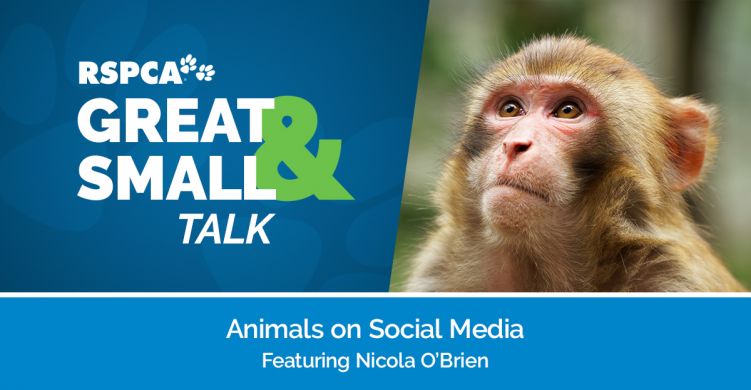
Brian: Hello, and welcome to RSPCA Australia's Great and Small Talk, where we discuss the pressing welfare issues animals face in Australia. I'm Brian Daly, and today we're talking about animals on social media, and in particular, the disturbing area of animal abuse on social media. It comes in many forms, and some of it may surprise you. And so, to help us understand the type of content we should look out for and how you can help reduce online cruelty, we're joined by Nicola O'Brien, the lead coordinator of the Social Media Animal Cruelty Coalition, or SMACC, as the acronym, from Asia for Animals Coalition. Nicola, welcome to the podcast.
Nicola: Thanks for having me. It's great to be able to come on here and talk about this issue.
Brian: And for getting up early in the morning for us in the UK. So, appreciate it. We all know the dangers social media presents to humans, both psychologically and physically. It's well documented, with child abuse cases playing out in court, and of course, the under 16s ban on social media we have here in Australia, but what may not be as obvious or well known is the significant dangers social media poses to animals. So, Nicola, could you give us the background on who is involved in the SMACC coalition and why it was formed?
Nicola: Yes, so as you mentioned, SMACC is part of the Asia for Animals Coalition, which is a network set up to support organisations that work on issues affecting animals in Asia, and that has many hundreds of members. Within that, members can come to AFA and highlight kind of where they might need support or where they want to network with others, so what we do is set up what we call mini coalitions within the big coalition, and these groups can come together and basically work on key issues, and one of those that kept coming up was this thing of animal cruelty on social media, which there wasn't really existing campaigns or research out there, there was a few people starting to look at this, but it's, it was a very new animal protection issue, really, in terms of it's online, it's where's the jurisdiction, how do we go about tackling this? So, AFA brought organisations together and was like, right, what can we do, and we started actively collecting data, first and foremost, of what's out there. What does this look like? Where can you find it? What animals are involved? And yeah, it was really shocking, and the scale of it is so huge, and as you can appreciate with it being online, it is very difficult to, you know, we can only ever capture a small picture of what's out there, but to really understand the scale, it's yeah, we're talking billions of things out there, yeah, and so at the moment we have almost 50 member organisations, so these are all NGOs or groups that are based globally who are working on this issue in one way or another, and yeah, we've grown so much in the last few years as awareness of this issue has grown in the public. There's interest in the press and from lawmakers now, so we're getting more organisations coming on board, which is fantastic.
Brian: It's great, because animal videos are so popular online, aren't they? Can you tell us why that is, and why does that make them risky from a welfare perspective?
Nicola: Well, I think in terms of why animal content is popular is because animals are great, I guess. You know, and whether people are actively engaged in animal protection work, like our organisations, or just day-to-day people that you know love to see animals being happy or behaving in ways that we find like amusing or endearing, which is absolutely brilliant, but I think where the dangers lie is sometimes people are responding to that or seeing behaviors or the way animals are being sort of put in environments and they're not realising that maybe that isn't in the best interest of the animal, so maybe the animal shouldn't respond that way, or maybe actually the way the animal responding is fearful rather than having a good time. So, a really good example of this is content of primates, often macaques. We see a lot, a lot of content involving macaques, and they may be seen to be smiling, so have like a smile on their face, but actually that is a sign of fear in those animals, but for someone who might just be scrolling on social media and don't know that, they just think, oh, this monkey's really enjoying this situation, so there's those kind of misinterpretations that are out there. But then the other sort of scope is promoting things like this, so not just misinterpreting that, but thinking, okay, so therefore that macaque is really happy being a pet in someone's house, so maybe that's fine, maybe I'd be interested in that, so it can not only kind of have that initial response from the viewer, but it could potentially lead to, you know, larger problems like the wildlife pet trade, or if we're talking about domestic animals, like cats and dogs, you might see someone on social media, there might be a trend, so we've seen trends where people will put cucumbers around their house to scare their cats, and they film the cats coming into the room, and the cats will have a really big physical response, so they'll leap up into the air, and that's being filmed, and people think that's amusing, but actually that cat is really scared, because back to their evolutionary line, as being, you know, big cats, things like a cucumber might look like a snake, which is actually really dangerous for cats out in the wild, so it's just an innate behavior for them to respond with fear, but people might just think it's like a prank, or you know, it's spooked, but you know, you've actually caused fear and alarm and distress in that animal, so but again, that can become a trend, and we see people hashtags associated with it, and people, you know, replicating it, as happens a lot on social media, right. So, yeah, there's these kind of ... it's that fine line between what is harmless entertainment for us, in terms of viewing animals and their wonderful behaviors versus kind of exploiting that that goes into an area that's not safe for those animals.
Brian: And it's such a quick scrolling mechanism, everything's taken out of context, isn't it? When you see these things, there's no understanding of all those areas of that, and the social media platforms, they're optimised for engagement rather than ethics or explaining a situation, so how does that algorithmic pursuit of attention inadvertently reward these shocking or disturbing animal videos?
Nicola: Yeah, it's obviously a huge part of the problem, so in lots of ways, so you know, in a basic understanding of how the platforms work, it's all about engagement, right? So they want content to be popular, and that if something is engaged with in any way, so even if it was someone putting negative emojis or negative comments on something, it still clutters engagement by the platform, so that content is then boosted because it says, hey, this is popular, let's put it in front of more people. So we advise against, in fact, engaging with cruelty content, because of that, we don't want this content being spread further and further. And in the other way, is of course, monetisation and advertising is huge on social media platforms, so they want to attach ads to content that is popular, so there is the risk that adverts are being put on this kind of content, which means money is being made by the platforms and by the advertisers on the backs of animal cruelty content, and we have major concerns around the creators themselves knowing that they can make money on adverts, so they continue to make this kind of content that's harmful to animals, and that because they're going to make some money from it through advertising and engagement, so there's a lot of motivation to keep content going, and that's why we see things, the success of things like trends that I mentioned before, because it feeds exactly into that process of algorithm. And the other thing is recommendations made by platforms. So, if you're a user that likes to watch content of maybe animals in the wild, you may then well be shown content that shows you those animals being kept as pets in inappropriate conditions, or even further being, you know, those animals then being put in situations that are deliberately physically abusive, and we do have suspicions that some of the creators out there that are intentionally wanting to harm animals and sharing that content that's a bit more niche, they're potentially also sharing less harmful content, so that their channels are getting people coming to their, you know, to getting that engagement and getting people to drive there.
Brian: Yeah, so it's, and it's so these staged videos and fake videos, they're driving people to their own site, so that they can make money out of the or get more advertising dollars. So, how do people distinguish between, say, a genuine wildlife rescue video or an a stage cruelty designed specifically to get people to follow them?
Nicola: Yeah, so this kind of fake rescue that you're describing is content that seems like a situation where there's an animal in need and someone comes in and rescues the animal, you know. We see NGOs put these videos out of the great work they're doing to help our animals, but people are exploiting that, and they're putting animals in danger, so they can film themselves rescuing the animals, and so some examples we see of this is animals being abandoned, dumped in bins, or in garbage trucks, or in quarries, and then we see the person go in and rescue them, but we also see animals that are potentially on the verge of drowning, really, really extreme, dangerous situations, so they do this, they film themselves rescuing, and then they ask, maybe for donations to say help us continue our rescue work. These creators are becoming better and better at making themselves look authentic, so social media users have to be thinking when they see these videos. The first thing we say is authenticity. So, who is this? Who's creating this content? Is it an organisation that you know? Do they look like a registered organisation? Do they have any information on their profile that shows that there may be a registered charity in your country or other formal registration that's not always there, but you know that can tell you straight away whether this looks legit. The other thing is, are they talking about what happens to the animals later? So, when they rescue these animals, what then? Because a genuine rescue organisation would follow up on that story, we maybe find those animals homes if they were rehomeable, and what we find on fake rescue accounts is it's just video after video of animals being rescued, and that's it. There's no extra narrative, there's no extra explanation of what's happened, and sometimes we even suspect that it's the same animals being used again and again, and we've analysed things like, you know, the fur patterns on the animals, and again suspect that is the same dog that's just been put into these awful situations. The second thing that we say is reality check, so would the animals actually be in that scenario, and a good example of this is where there was a trend of fake rescue videos where you would see a sort of hole dug into the earth, and in the hole would be maybe a kitten, and then there would be a huge snake coming in after the kitten, or a huge bird of prey in there attacking the kitten, or it could be a baby monkey and a huge snake coming in, and it's a really unusual situation for someone to just be standing and filming and happen to find this kitten with a big snake coming in to attack them, and we know that that trend was, we could see it, every video had the similar scenario, so again asking yourselves, why would there be a hole with a kitten, but also why is someone standing there filming? Why are they allowing this situation to happen when really their priority should be saving those animals if it is a genuine situation, and finally, like the creation of the content, so does it look too professional? Is it too well edited? But again, are they just standing there and delaying to get the shots before they actually do something, even though the animal is clearly in imminent danger?
Brian: So these animals that they're filming are obviously in danger, but is there further issues related to this offline as well as online, so you know, does it cause breeding or increased trafficking, or wanting, say, to have exotic animals as pets?
Nicola: Yeah, absolutely. So, there have been a lot of studies carried out online looking at sentiment analysis, so looking at particular species that are shown online as wild animals kept as pets. A famous paper, very well-known research, was around slow lorises, and this species, when they are scared, they'll kind of hold their arms up in the air and expose their elbows, and that's because they actually have a venom in their elbow. It's like a defense when they're feeling threatened, so there's a lot of content where people would show their slow lorises being tickled on the tummy, and then the arms are going up in the air, but it's not cute, it's fear. So a sentiment analysis been carried out on these kind of videos, and you can see commenters saying this is cute, this is so sweet. How do I get one of these? I'd love to have one of these as a pet, and we see that in many different species as well. And so we're calling this the vicious cycle, because when you think about it, when I was a kid growing up, I didn't know that many people that had wild animals as pets. It was no, it wasn't that common, or if you did know someone, you wouldn't experience that until maybe you went to visit their home, but now people can just put this online and people are seeing species they probably didn't know existed that look cool, that are interesting, and they can quickly find information of, like, how do I get one of those, but the information they're consuming on the social media accounts is often completely inappropriate, so they might see that and say, okay, I can keep one of those in my home, they can live in a cage, and I can dress them up, great, but actually that is not meeting the needs of that animal at all, so it's miseducation as well.
Brian: Feels like we're going back to that, you know, the whole era of the born free of the, you know, back in the 50s and 60s, where it was regarded as a novelty to have raised tigers in your home or something like this, and lions, it really wasn't suitable for this, and it sparked, I think, a lot of the movement for, for the animal welfare, that we should not be doing this, but this seems to be taking it way back again.
Nicola: Yeah, absolutely. And the thing that's difficult about this is, you know, as animal organisations, a huge part of our work is, of course, public education, and that continues, but the rate at which this is happening online and trying to get our content in the feeds of people that might, that are interested in animals, and you know it's a challenge, because it's particularly when you know we haven't probably got huge advertising budgets in there, or we want to be careful about the content we're putting out, and it might not be as exciting as trends, so it is a challenge to compete with what's out there already.
Brian: It is, and as you know, I was with Animals Asia when the SMACC Coalition was formed, and yet we saw that difficulty firsthand, of our videos were not extreme, and also we'd get on the flip side people saying, oh, this isn't real, or that's not real, or why they're doing, you know, the people there, so, so it seems to form an element of distrust that makes it even more difficult for the organisations that are genuinely doing good work to get that message out there as well.
Nicola: Yeah, and I think it makes me think of AI, and that we're starting to see, particularly fake rescues created in AI, or maybe it's a real fake rescue, and it blending in AI, and you know, you can argue, well, AI is potentially better because no real animals are being harmed, but all it does is, you know, we say we treat it exactly the same, don't engage, report this to the platforms, and because it's still muddying the waters around what's okay to do with animals, and it's also potentially diverting really crucial funding away from real organisations that need this to help real animals in need, so that is a new challenge for us all worldwide, and whatever issue we're talking about, right, but it's where we're still trying to figure out, like, what do we do with this.
Brian: Yes, I think I think everybody's in the same boat there. What do we do with this? How do we address this? And talking of addressing it, you said previously that this issue, because it is global, because it is online, it is difficult to work out how to get this harmful animal content removed from these platforms. Do you think the systems that promote it in the first place are actually being addressed?
Nicola: So, it depends. Globally, we're seeing, we're seeing different things. We are seeing movement in a way we didn't before. So, some social media platforms are actively wanting to include animal welfare in their community guidelines, for example, so stating what they do and don't allow on the platforms, and some of them you would be hard pressed to find really graphic physical abuse of animals. Unfortunately, some of the big, big players were still finding lots of fake rescue content, monkey abuse content, and it's really frustrating at the lack of active progress from these platforms to deal with this, like you know, some of the animal torture content that I have seen, I just don't understand how that in any way, shape, or form can make its way onto a public platform, and it be this difficult to get these things removed, and for these platforms not to go, "Hey, this is a problem, like let's make sure we are actively stamping this out before it appears." Yeah, it just, it's as you can tell, it's very frustrating, but alongside this, there have been developments in a legal sense, because more and more countries are looking at online safety and protecting users, so SMACC and other organisations successfully lobbied for the inclusion of animal cruelty content in legislation in the UK called the Online Safety Act, and it is the first time that online safety law has explicitly noted animal cruelty. It's still very limited in its scope because it's thinking about that more extreme content, but of course we are pushing all the time for it to have a wider scope, but you know that was a development that is at least a recognition that this is harmful not just to the animals but of course to people watching it, like it has impact seeing something graphic and gory, particularly our younger people, that's been some progress, and we are seeing this issue not just for animals, of course, but like you mentioned earlier, you know, the ban in Australia of under sixteens, we've seen similar bans in Malaysia, other countries, it's being debated in the UK, so those things are going to have an impact, and that they're hopefully going to put more pressure and responsibility on the platforms themselves, you know, because organisations like ours, we could identify someone who's creating this content, investigate them, catch them, and some organisations are doing that, and it is fantastic, but if we could get the platforms to make this stuff take, literally take away the platform for these abusers, basically, particularly with the more graphic content that could have, you know, a whole blanket impact. So the legal side of it is, is just as important.
Brian: Because that's the, that's the real true meaningful accountability from these platforms that you're looking for.
Nicola: Absolutely. But again, you know that's challenging as well, particularly when we look at how things are developing in, like, the US. There's a lot of movement there to reduce regulation and accountability for social media platforms, and that's really hard, because that's where a lot of these platforms are headquartered, so you know, but that regional legislation, for example, like the OSA Online Safety Act in the UK, can at least have some impact.
Brian: And you mentioned before about how, you know, liking something or just reacting to any of these videos actually helps the algorithms and helps the sharing. I think Elon Musk has just dropped the algorithm online, so you could see the algorithm of X, and it's like so many points for a like or a dislike, and then even more points for a comment on it. So, in this way, you mentioned before about audiences, do they unknowingly become part of this cruelty cycle by sharing these videos or commenting on them?
Nicola: Yeah, as I say, you know, we have what we call the SMACC three steps. It used to be the five steps, but we've recently simplified it. So, first of all, we say be aware, so listening to this podcast, you know, looking on our website, just being aware and critically thinking of what you're, what you're seeing. Do not engage is probably the most important step, because yes, all engagement is leading to the promotion of this, this content. So we do see really well-meaning and really upset people completely understand it. They see cruelty content, and they want to call it out. They want to say, you know, this isn't right, this isn't how animals should be treated, or this is a fake rescue. You know, do not send them money, and that could have it have an impact on a few people that see that, but unfortunately that is leading to that content being put into front of more people, and sometimes we go on to content, and the vast majority of the comments are people calling it out, and that is, that is concerning. So we don't want to play into the algorithm, we don't want to play into the creator of this content, who obviously is sharing this, because they want people to engage with it, so we say, do not engage in any way. Report it to the platform, because yes, there are problems with the reporting processes on some of these platforms, so that is a piece of work in itself. But we are trying to actively speak with the platforms, and it's really helpful if we can say people are reporting to you, we know they are, they're telling us, you know, what are your statistics showing, so that they know that this is a problem, that they know that people do not accept this, that these things are animal cruelty. So that's the action that we promote, and then, of course, people can report it to SMACC as well, which helps with our data collection, but it's really important that the report goes to the platform before it comes to SMACC, because that's where we want to see that impact.
Brian: So that's that's where people can vent their rage and frustration, not by liking things or saying it online, but actually getting straight to the platform, that's what they should be doing.
Nicola: Absolutely, yeah, yeah, I think the do not engage is a really important part of the message, but I think even before that, that's why we have this be aware step, because we can't expect everyone online to be experts in animal behavior, you know, you might not know what you're seeing as an animal exhibiting discomfort, but just to try to think critically. You know, just step back and be like, why is that animal in that situation? Often, particularly when you see wild animals, I even have it myself. You know, people send me cute animal videos, and sometimes I, you know, they know what I do, and they're animal lovers themselves, but you know, even I can sort of look at that and be like, yeah, but why is that animal there, you know? And then, okay, I'm a bit of a party pooper, perhaps, because people are just trying to share nice things with me, but I'm so in tune to this, and you do start to notice those things, and there's been plenty of things that you know now I see, and straight away I'm like, that, that is not okay for animals, so you know, we all care about animals, we don't want to be part of anything that's harming them, so just think, you know, and social media, again, is designed for not a lot of thinking, you know. We doom scroll, we just, you know, our brains can switch off, we can just flick through content and videos, which, again, I do, but when it comes to animals, let's just stop and think.
Brian: Yeah, and I think it's true of any content, really, because there's, you know, it's all designed just to feed us, to keep scrolling, as you say, and, and there are so many good videos of animals online, you know, some great, great things that really do, as you say, promote well-being of animals and show beautiful situations of that human animal bond. There's so many positive things there, but it's that really tricky area of, as you say, really looking at it critically and saying, okay, is that okay? What they're doing there is that this, that harmful to them? Are those animals, even domestic animals, being kind of forced into doing this to be looking cute, like you said, the cats with the cucumber, kind of thing. It's a nasty thing to try and have to delve when you're just as you say, just doom scrolling or anything. People aren't thinking that critically, but it's time that people really, if they do love the animals, is to really look at this in a, in a new way.
Nicola: Absolutely, because you know a lot of what we're doing as animal lovers and protection organisations is looking out for animals, and usually it's around the way that humans are treating animals, you know, the various industries that they're involved in, or how we care for animals that we're engaged with, and those animals online are also part of that, even though they're not there in front of us, you know, they aren't there for creating content and entertainment, if it's, you know, they're not, full stop, but it's also if it's having a negative impact on those animals, and that is not okay, and yeah, we can't expect anyone to be experts, but just a little bit more stepping back and thinking about it, you might say, "Hang on, this isn't right", and then you can report that, and then you've taken an action for animals just very easily on your phone as part of your day, and that hopefully is good for this long-term campaign, and making an end to this, and convincing platforms to do more to protect animals.
Brian: Absolutely, well, thank you so much for your time today, Nicola. This has been fantastic to hear all the information that you shared with us. As, as I mentioned, you know, I was on board when this SMACC coalition was first organised, but so it's been on my radar for some time, but hopefully sharing this information can get more and more people on their radar as well, so it's an issue everyone can actually do something about by just thinking critically, stopping to think, and just helping reduce that shocking harm inflicted on social media. That's just what we want to see. So, thanks for all the work you're doing with the SMACC Coalition and Asia for Animals, and all the coalitions there, it's keeping animals safe online, but also all the organisations that are doing great things to help animals all over. So, thanks again for your time today, Nicola. It's been really great talking with you.
Nicola: Thanks so much, and thank you for inviting us on. You know, it's great to speak to as many people as possible about this issue, because there's still a lot of awareness to be done, just really appreciate it, and people can check out our website, endcrueltyonline.com and we have a lot of guides on there to help you with your spotting of cruelty content online, so thank you so much, and yeah, happy happy animal scrolling.
Brian: Thanks so much, Nicola.
Nicola: Thanks.
Brian: We've been talking today with Nicola O'Brien from Asia for Animals, who is the lead coordinator of the Social Media Animal Cruelty Coalition. And thank you for listening. If you'd like any more information on how you can help end animal cruelty online, as Nicola said, you can visit the SMACC Coalition's website at endcrueltyonline.com. You can also visit the RSPCA Australia's website at rspca.org.au or the RSPCA Knowledgebase at kb.rspca.org.au. And don't forget, you can subscribe to the podcast series at the RSPCA website, or all the usual podcast streaming platforms. I'm Brian Daly, and I look forward to your company next time on RSPCA Australia's Great and Small Talk.